This was originally published on my Substack, The Fed Up Mom’s Club. I’d love for you to follow along there for more journal entries about motherhood, diet culture, and finding ourselves in all of it.
If you follow me on instagram, you might have seen that I’ve declared this year my “crazy flower lady” year. And by that I mean this is the year I’m finally feeling like I have enough capacity to start, maintain, and grow a flower garden.
It might seem weird that a dietitian is more excited about planting flowers than veggies, but what can I say? Flowers are happy. Flowers support pollinators. Flowers don’t have to be cooked and then spit out by picky toddlers. It’s not that I don’t like growing vegetables, I’m just way more excited about surrounding myself with flowers all summer, making gorgeous arrangements, and embracing my inner botanist.
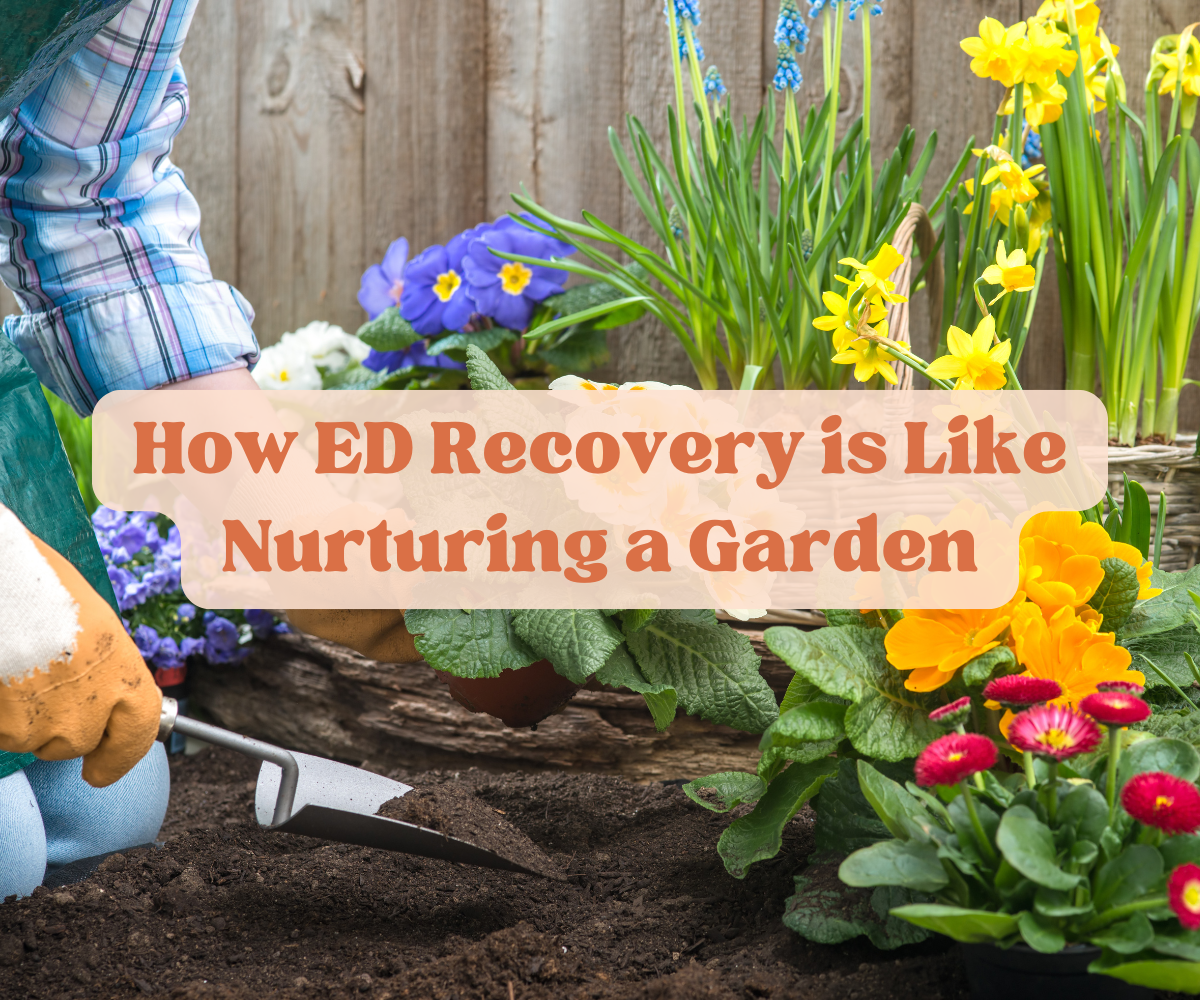
Lately, I’ve had a lot of thoughts about the metaphors that exist within my pursuit of flower gardening. But the one that I want to write about today is about how building and maintaining a flower garden is a lot like eating disorder recovery.
I’ve long used the metaphor of gardening to help explain the process of eating disorder recovery, but it wasn’t until getting my hands dirty (literally) in the garden that the comparison really solidified itself for me.
Eating disorders are like weeds in a garden
This is what I’ve always said, without really understanding the significance of the metaphor. Eating disorders, and eating disorder thoughts, are like weeds in a garden. If left unchecked, they will grow forever. Not only do weeds in a garden take away from the beauty of the space, they literally steal nutrients from the plants you want to grow, stifling their potential.
Recovery is like weeding
How do you get rid of weeds in a garden? There’s really nothing quite as effective as getting your hands dirty (or wearing a cute pair of gardening gloves), and pulling them out. Weeding is hard work, but the payoff is undeniable. Whatever you planted – flowers, vegetables, or herbs – will thrive because they can access all the nutrients, water and space they need to grow. Just like recovery, there’s no way around the hard work. And just weeding once doesn’t take care of your garden forever. The weeds will want to grow back, and you’ll have to get out there again and pull them out.
But the more established your plants are allowed to get, the more resilient they will be to the weeds that try to steal from them.
It’s hard work, especially at the beginning
I’m definitely far from a professional gardener. Figuring out how to establish and care for a bunch of different plants is a little overwhelming at times. Carving out enough time to get out and water, weed, and prune all the flowers will take getting used to. But that doesn’t mean it’s not worthwhile.
I’ve had my share of summers where I started the season off strong, only to get bogged down with the work of maintaining the garden and let things get overgrown. I’ve forgotten to water, neglected weeding, and wondered why my plants never thrived.
I expected to have a beautiful garden without accepting that it would take a lot of work.
Similarly, eating disorder recovery can sometimes feel like taking on a whole new part time (or full time) job. Making it to appointments with your clinicians, following your meal plan, challenging eating disorder behaviors, and facing fear foods is *not* easy. But without this hard work, there is no lasting recovery.
No garden is perfect
There really is no such thing as the perfect garden, and there’s no perfect eating disorder recovery either. Recovery is the place you get to when you are able to stay on top of weeding your garden. The weeds don’t last long enough to steal nutrients away from your beautiful plants. They may appear – and reappear – but they aren’t dominating.
If you’re navigating eating disorder recovery and want support from someone who gets it – clinically and personally – I’d love to work with you. Contact me here to get started.